
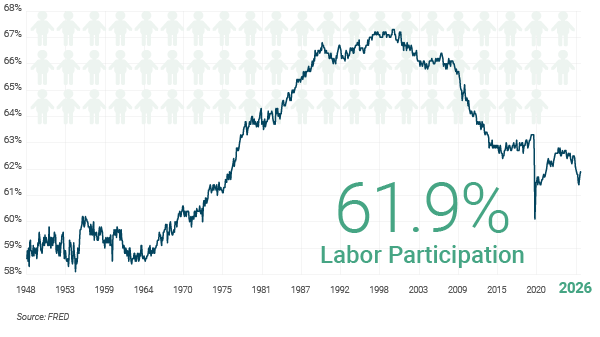
The latest federal jobs numbers show that while labor force participation has fallen to 61.9%, subdued compared with historical data, the percentage of workers in so-called prime age (ages 25-54) tells a different story.
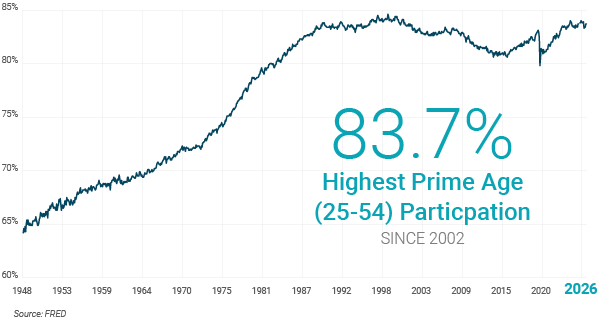
At 83.7%, the prime-age participation rate is stronger than it’s been in 25 years and close to its all-time high. These are the workers most likely to be mortgage borrowers, and the data shows they remain firmly connected to the labor market, even as economic uncertainty rises.
Economic uncertainty can create questions, hesitation and concern for homeowners, though, regardless of their employment status. The servicers that will be best positioned for the future are the ones who understand this and have started to build stronger homeowner relationships long before any issue happens. In today's market, servicing is a front-line customer strategy.
In a slower-growth housing market like what we’re experiencing, every interaction becomes more valuable.
In its June 2026 State of the Nation’s Housing Report, Harvard University’s Joint Center for Housing Studies notes that it has observed weakening household growth and mobility, which means fewer new households and fewer opportunities for those in the mortgage industry to replace lost customers with new ones.
To blunt the impact of this, forward-looking servicers are investing in:
- Personalized communications
- Digital self-service capabilities
- Early intervention strategies
- Financial wellness resources
- Retention-focused customer experiences
The Takeaway
The next servicing cycle may not be defined by a surge in delinquencies. Instead, it may be defined by how effectively servicers engage homeowners before financial stress turns into financial hardship. In a market characterized by economic uncertainty, slower household formation and reduced mobility, homeowner retention and proactive outreach are strategic imperatives.
In short, servicing creates value when it helps homeowners feel informed, supported and confident, regardless of where they are in their financial journey.
The falling labor force participation certainly has caught attention, but it’s missing the context of the underlying reality: strong prime-age participation, massive uncertainty for homeowners and a growing imperative for servicers to expand their thinking and embrace their role as ambassadors for homeownership.